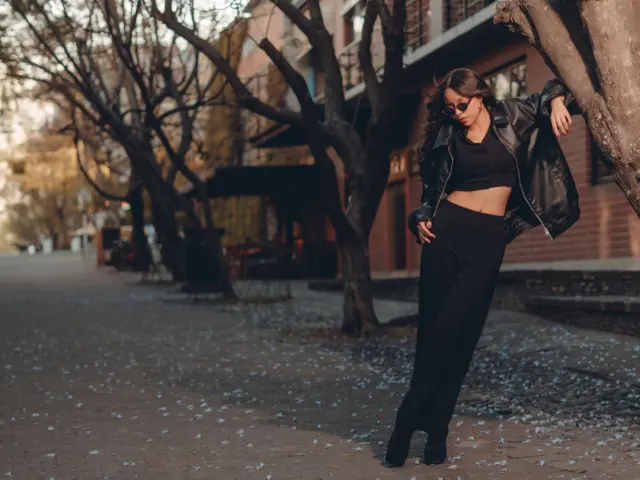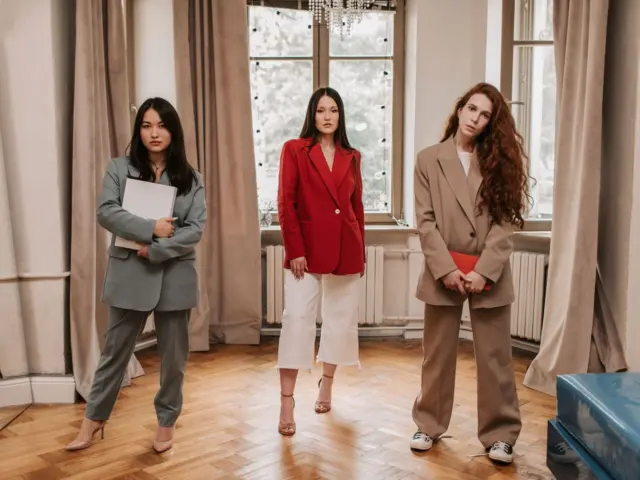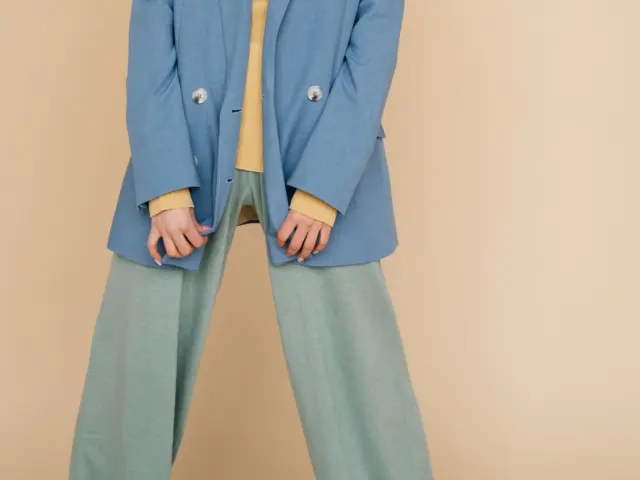

Worried a big sweater will swallow you whole? Learning how to wear oversized clothes petite comes down to one rule: keep one piece roomy, make everything else fitted, and show your waist, wrists or ankles.
This guide is part of our wider collection of petite style tips, and it focuses on volume: where to allow it and where to rein it in.
| Item | Rule of thumb |
|---|---|
| Petite size definition | 163 cm (5 ft 4 in) and under |
| Shoulder seam on an oversized jacket | Above your bicep |
| Sleeve length | Ends at the wrist, not the fingertips |
| Blazer hem | Above the hip or at mid-thigh |
| Oversized pieces per outfit | One at a time |
| Best belt width | Narrow |
The figures come from PureWow’s petite blazer guide and Wikipedia’s petite size entry. Sizing definitions and styling advice can change, so check the source before you rely on them.
What “oversized” should mean on a petite frame
Oversized is a deliberate shape, not a size that simply failed to fit. One petite stylist quoted by Who What Wear puts it plainly: oversized and too big are two different things, and the latter can make you appear frumpy.
That difference is the whole game. A good oversized piece has a considered drop shoulder, a boxy body or a wide sleeve. A piece that is just too big has seams in the wrong places and fabric collecting where you do not want it.
The same stylist’s advice, as reported by Who What Wear, is to shop for pieces that are designed to look oversized and are labelled “boxy”, “oversized” or “relaxed fit”. She adds that you should hem the sleeves to avoid any unflattering bunching.
It also helps to know where you sit on the size spectrum. Per Wikipedia’s entry, a petite size is a standard clothing size designed for women 163 cm (5 ft 4 in) and under, and it takes body proportions into account as well as height. Retailers draw the line in different places, so treat that as a guide, not a rule.
Check the fit points before you check the style
Three spots decide whether an oversized piece looks intentional: the shoulder, the sleeve and the hem. Get these right and a roomy coat reads as chic. Get them wrong and it reads as borrowed.
- Shoulders. PureWow says to pay attention to where the shoulders and sleeves hit, and that the shoulder seam should stay above your bicep.
- Sleeves. They should end at your wrist, not your fingertips. If they run long, a tailor can shorten them.
- Hem. A blazer that ends above the hip or at mid-thigh elongates the legs and prevents the look from appearing bulky, according to PureWow’s source Jenny Wang. The closer the hem gets to the knee, the more it can dwarf your frame.
Structure matters too. In the same PureWow piece, stylist Angela Foster recommends blazers with structured shoulders and a slightly tailored silhouette, which keeps the oversized look polished rather than overwhelming.
If a piece you love is almost right, Petite Dressing’s styling post makes the practical point that if things feel a little off, a trip to the tailor can work wonders. The author describes a camel coat that was too long and wide in the sleeves until the hem and shoulder seams were altered.
A tailor is worth the money on a coat you will wear for years. For a cheap knit, it is easier to try the next size down.
Balance the volume: one roomy piece at a time
The most repeated rule among petite stylists is simple: pair one oversized piece with fitted ones. PureWow’s expert says two oversized pieces paired together make us look shorter and wider.
In practice, that means choosing which item gets to be big and letting the rest follow the body.
- Oversized blazer with slim trousers or a narrow skirt. Foster advises saving wide-leg pants for another day when you wear a big blazer.
- Chunky sweater with a fitted bottom half, or with jeans that have a little volume if you tuck the sweater in.
- Oversized coat over a fitted knit and tailored trousers, which Petite Dressing says keeps the outfit sleek and structured.
Wide-leg trousers are not banned. They just need a fitted top, and then they become the single roomy piece.
Prints add visual volume of their own, so when the silhouette is already big, a calmer pattern is usually easier to manage. Our guide to the best patterns for petite frames covers which scales and designs sit well on a shorter frame.
Define your waist: tucks and belts
Volume without a waistline can look like a tent. Showing where your body narrows is the quickest way to bring shape back.
The simplest method is a tuck or half-tuck. Petite Dressing says the front tuck creates shape and defines the waist, which is so important when you are petite. It also balances the volume of a big sweater against the volume of jeans.
A belt does the same job for layers you cannot tuck. PureWow’s Foster says a belt over a blazer adds definition at the waist and improves the overall proportion. She adds that it feels unexpected when you wrap the front rather than fastening the buttons, and that narrow belts work best.
Petite Dressing agrees on the width, using a slim leather belt to cinch an oversized button-down shirt.
A few quick ways to apply this:
- Front-tuck a chunky knit into high-rise bottoms.
- Wrap a narrow belt over a long cardigan or blazer.
- Cinch an oversized button-down with a slim leather belt.
Use colour, fabric and bare skin to keep your length
Once the shape is balanced, three small choices keep the outfit from sinking you.
Stay in one colour family underneath
PureWow’s Wang recommends pairing a statement silhouette with a minimalist, monochrome outfit as a base layer. An unbroken line from neck to ankle makes you look longer, and the oversized layer on top becomes the only focal point. For more on this approach, see our guide to monochrome outfits to look taller.
Who What Wear’s stylist suggests mixing fabrics inside a monochrome look, such as leather with wool or shiny satin, so it stays interesting.
Choose fabrics that drape
The Who What Wear stylist calls fabric choice underrated in helping you feel more elongated. She recommends slinky or fluid fabrics like silk or wool that drape the body in a flattering way.
Show a little skin
Petite Dressing notes that when you are playing with lots of fabric, it helps to show a little skin to balance things out. The wrists, ankles and neckline are the places it suggests.
PureWow’s author does something similar by scrunching the sleeves up the forearm a bit to show some skin and balance the look.
Shoes help as well. Petite Dressing reaches for pointed-toe heels with an oversized coat, and skin-tone heels with wide-leg jeans, to gain leg length.
A simple formula to try this week
Put it together with a short checklist before you leave the house:
- Pick the one oversized item and check the shoulder seam, sleeve and hem.
- Make everything else fitted or tapered.
- Define the waist with a tuck or a narrow belt.
- Stay in one colour family if you want extra length.
- Show a wrist, an ankle or a neckline.
If the outfit still looks heavy, swap the roomy piece for a more structured one before you change anything else.
Frequently asked questions
Can petite women wear oversized clothes at all?
Show answer
Yes. Petite stylists quoted by PureWow and Who What Wear say it works when the piece is designed to be oversized, the shoulders and sleeves land in the right place, and the rest of the outfit is fitted.
Should I size up or buy petite sizes for an oversized look?
Show answer
Who What Wear’s stylist says it is difficult to find oversized clothes that fit well when you are petite, so look for items labelled boxy, oversized or relaxed fit. Retailers define petite differently, so check each brand’s size chart.
Can I wear two oversized pieces together?
Show answer
PureWow’s expert says two oversized pieces make you look shorter and wider. If you want to try, keep one of them structured and show your waist or wrists.
What shoes work with oversized outfits?
Show answer
Petite Dressing suggests pointed-toe heels with an oversized coat and skin-tone heels with wide-leg jeans. Matching boots to your trousers also extends the line, according to Who What Wear’s stylist.