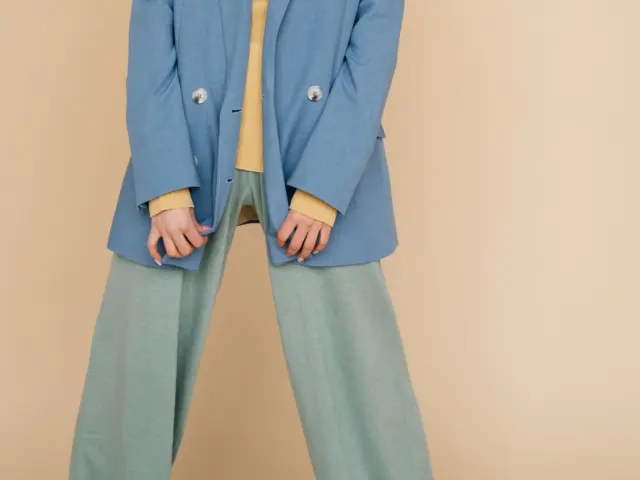

Does everything you put on seem to swallow you whole? Getting petite outfit proportions right starts with one idea: divide your look into thirds, not halves. One piece takes two-thirds, the other one-third.
This guide sits inside the site’s collection of petite style tips.
| Item | Value |
|---|---|
| Height that “petite” sizing is built for | Below 5′ 5″ |
| Share of the torso-to-feet line for one garment | ⅔ |
| Share for the paired garment | ⅓ |
| Split to avoid | Even halves |
| Body shapes in the Balance vs. Enhance formula | 5 shapes |
| Heights of the two petite examples (Carpenter, Coughlan) | 5′ and 5’1″ |
The figures come from Karen Kane’s style blog and PureWow. Guidance like this can change, so check the source before you rely on it.
How the rule of thirds works
The rule of thirds is one of the borrowed-from-the-arts principles that PureWow groups with the Three-Color Rule, both aimed at the colour and composition of an outfit. Karen Kane’s blog post of September 21, 2022 gives the practical version: if one garment takes up ⅔ of your body from torso to feet, the other paired garment should only take up ⅓. You can read both in PureWow’s February 18, 2025 article and on Karen Kane’s style blog.
Think of your outfit as two blocks stacked on top of each other. The line where they meet is where the eye stops, so moving that line changes how tall you look.
According to that same Karen Kane post, the rule helps with balance, visual interest and extra length when you want it. It is described as useful for all body shapes, and especially for petite women.
What “petite” means in this context
In the fashion world, petite refers to styles made for people who measure below 5′ 5″, as Karen Kane’s September 21, 2022 post puts it. You can check that wording on the retailer’s blog.
Petite garments are cut with shorter hemlines, sleeves and inseams. That matters for proportion, because a shorter hem changes where each block of your outfit ends.
Why even halves look blocky
The same Karen Kane post says the goal is to avoid even halves, which create a blocky and stunted appearance. The reasoning is simple: when two pieces split your body down the middle, nothing leads the eye up or down.
Halves can sneak in through ordinary pairings. Watch for combinations like these:
- A hip-length top with a knee-length skirt, which can cut you near the middle.
- A boxy tee that ends at the same spot as a mid-calf hem.
- A long cardigan over a dress of similar length, with no change of colour to break it up.
None of these is wrong. They simply tend to land near the centre, so a small adjustment usually fixes them.
Test your outfit in three steps
You do not need a tape measure. A full-length mirror and a minute are enough to check whether you have a clear two-to-one split.
- Stand straight and find where your top ends and your bottom begins.
- Ask which piece covers more of the line from torso to feet. One should clearly win, with the other covering about half as much.
- If it looks like even halves, move the dividing line: tuck the top in, half-tuck the front, or swap to a bottom with a different rise or hem.
Small moves tend to work best. A tuck or a shifted hem changes the split without changing the outfit.
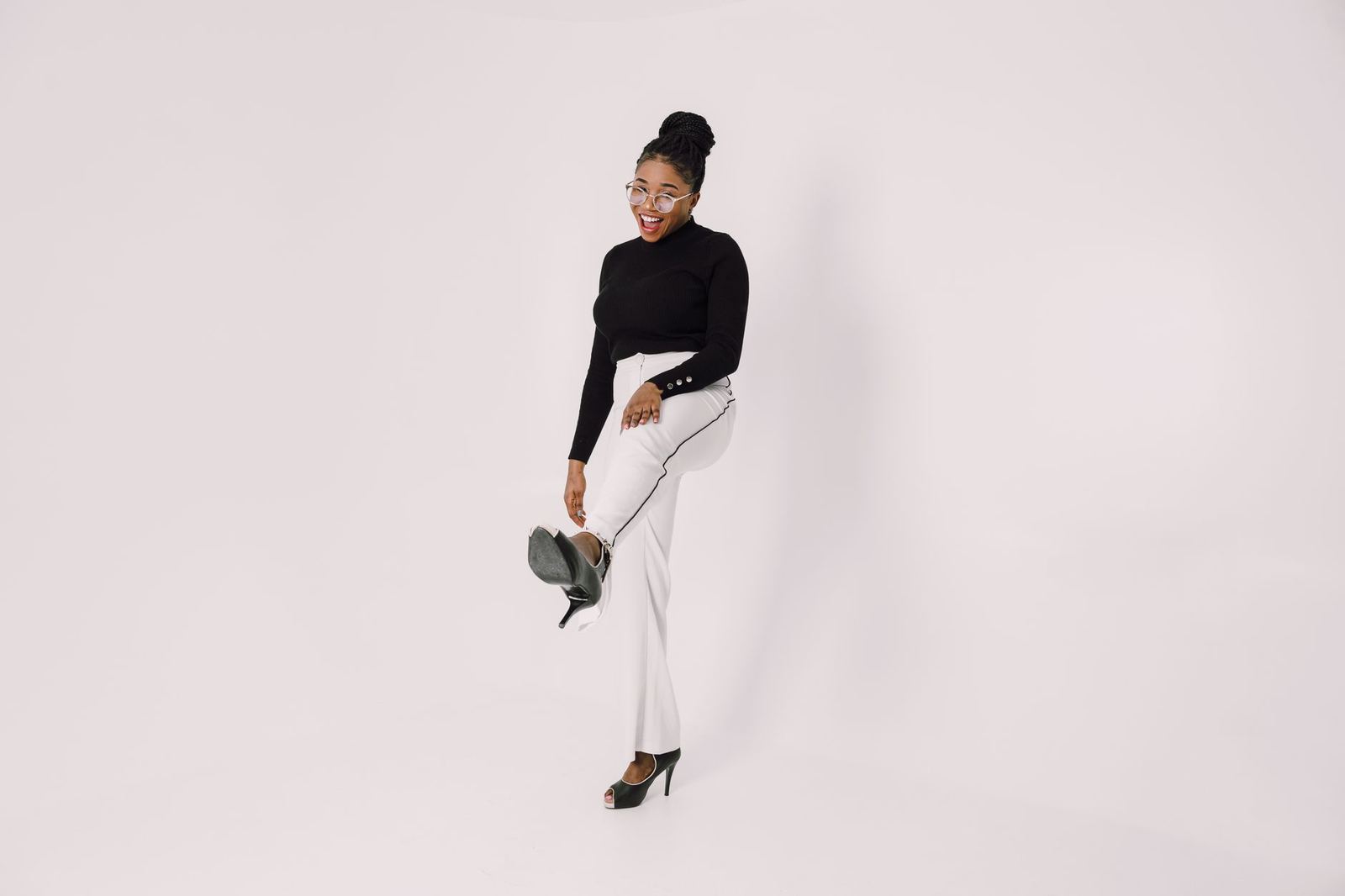
Should you balance or enhance your shape?
PureWow’s Balance vs. Enhance formula adds a second lens to the rule of thirds. In its February 18, 2025 article, the idea is that the two best approaches to dressing involve either balancing your figure or enhancing certain aspects of it, and each can create flattering looks. The article is on PureWow.
It starts by asking which of five body shapes you are closest to:
- Triangle: wider hips and legs.
- Inverted triangle: wider shoulders or a larger bust.
- Rectangle: a less-defined waist.
- Oval: a wider midsection.
- Hourglass: balanced top and bottom with a defined waist.
To balance, you match your top half to your bottom half. For broader shoulders or a bigger bust, PureWow suggests wide-leg bottoms or an A-line skirt, which add volume to the lower body. For wider hips and legs, it suggests a more structured top, ruffles or embellishment that draw the eye upward.
To enhance, you play up what you already have, for example with wrap dresses that cinch at the waist for hips, or low-cut and off-the-shoulder tops for a larger chest.
Torso length changes where your thirds fall
PureWow also asks whether you have a short torso with longer legs or a long torso with shorter legs. If your torso is long, high-waist bottoms shorten your midsection and add length to your legs. If it is short, low-slung pants or drop-waist dresses can make it appear longer.
This links straight back to thirds. Your waistline decides how the two blocks divide, so a different rise can turn even halves into a better split.
Two petite examples
PureWow illustrates the formula with Sabrina Carpenter, listed at 5′, and Nicola Coughlan, listed at 5’1″. Carpenter, described as a triangle, adds volume at the shoulders with a flowy cape to balance her hips in one photo, then enhances them with a ring of feathers in another. Coughlan balances with A-line styles and then leans into her figure with a structured off-the-shoulder neckline. The details are in the PureWow article.
The takeaway for you: both approaches work, and you can switch between them from one outfit to the next.
Pants, skirts and the waistline
Bottoms are where most petite outfit proportions are won or lost, because the rise and the hem set the lower block. A higher rise lengthens the leg line, which is why it appears in PureWow’s advice for a long torso.
For a closer look at that bottom half, read the guide on how to wear high waisted pants petite.
Skirts follow the same logic, with hem length doing the work that rise does for pants. If a skirt is your next purchase, the guide on how to wear midi skirts petite looks at where the hem lands.
Frequently asked questions
Does the rule of thirds only work for petite women?
Show answer
No. Karen Kane’s September 21, 2022 post describes it as beneficial for all body shapes, though especially for petite women. You can read the wording on Karen Kane’s style blog.
Should the top or the bottom take the larger share?
Show answer
The rule says one garment takes ⅔ and the paired garment takes ⅓, without naming which. Either way round can work, so pick the one that suits your torso length and shape.
Who counts as petite in fashion sizing?
Show answer
Karen Kane’s blog (September 21, 2022) says petite styles cater to people who measure below 5′ 5″. Brands set their own ranges, so check the size guide of the one you are shopping with.
Do I have to choose between balancing and enhancing?
Show answer
No. PureWow’s February 18, 2025 article shows Sabrina Carpenter balancing her hips in one photo and enhancing them in another. See the full piece on PureWow.