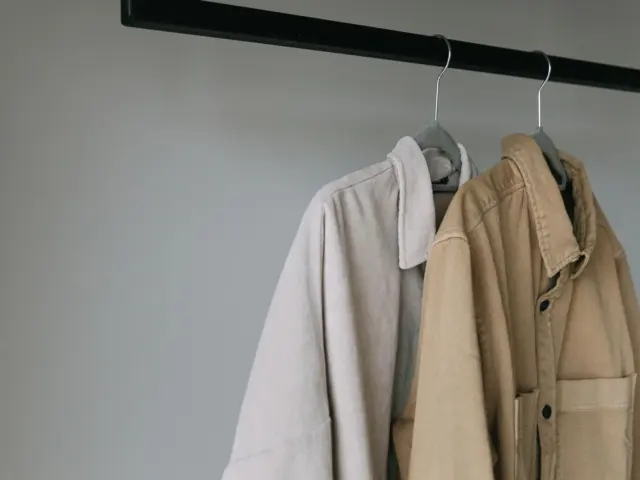
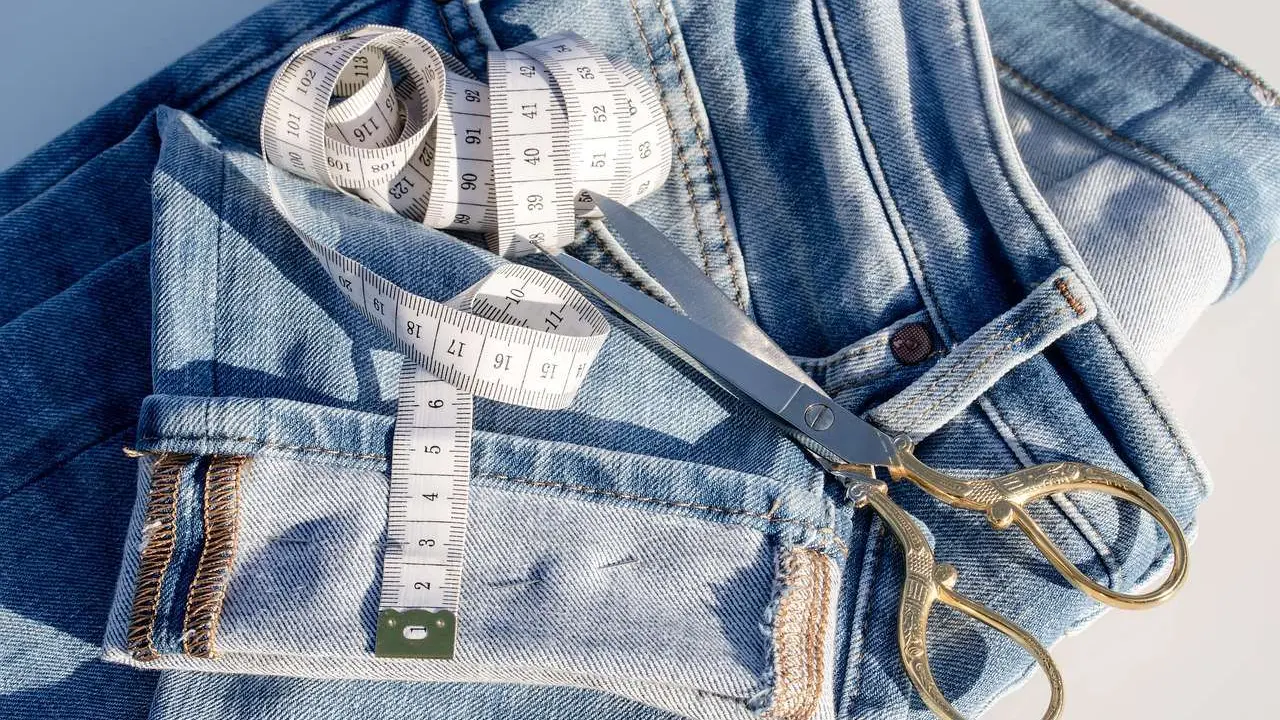
Pants that pool at your ankles are fixable at home. Here is how to hem pants for petite legs: try them on with your shoes, pin the length, fold a double hem, and stitch it by hand or machine.
For more fitting help, browse the petite fashion section of this site.
| Item | Value |
|---|---|
| Finished hem depth in one worked example | 2.5 cm |
| Measured up from the pinned edge before trimming | 3.5 cm |
| Suggested floor clearance for dress pants and khakis, worn with shoes | At least half an inch |
| Hand-sewing thread length per needle | About twelve inches |
Figures come from the Simply Sewing hem guide and the Silver Bobbin guide to hemming pants. Hem depths and clearances vary by garment and can change, so check the sources before you rely on them.
What you need before you start
A basic hem is a beginner-friendly job. A sewing blog lists the time needed at around 15 to 60 minutes, depending on your skill level.
Gather these tools before you cut anything:
- A tape measure or ruler
- A fabric marker or tailor’s chalk
- An iron and ironing board
- Pins or sewing clips
- A seam ripper and fabric scissors
- Matching thread and a hand needle, or a sewing machine
Test your fabric marker on a scrap first. One sewing guide warns that an untested marker can leave a permanent mark, and a hemline showing through is hard to undo.
If your pants are denim or another thick fabric, reach for sewing clips instead of pins. The same guide notes they are not as easy to poke through thicker materials.
How do you mark the right length on petite legs?
Start with the shoes you plan to wear with the pants. A Simply Sewing guide points out that a shoe with a heel means the pants need to be longer, so a flat-shoe hem will look too short with heels.
Pin the new length while you stand up straight. Use the back of your foot as a guide and keep checking in the mirror, since bending down to pin yourself will throw off your read of the hem. If you can, stand on a stool and let a helper do the pinning.
Next, decide how much clearance you want. Silver Bobbin says dress pants and khakis should hang at least a half inch off the floor when worn with shoes, while jean lengths vary a lot with style.
Think about the break too, which is the crease that forms where the trousers meet your shoes. One sewing newsletter says there is no right or wrong choice here, so pick the look you like and pin both legs to match.
Cutting and folding a double hem
Take the pants off and turn them inside out. In the worked example from Simply Sewing, the finished hem is 2.5 cm, and the maker measures 3.5 cm up from the pinned edge before trimming off the excess.
You can make that depth bigger or smaller to suit the pants. A double-fold hem tucks the raw edge inside, so the fabric does not fray.
Do you need to unpick the old hem? One guide says you can skip that step when you are shortening the pants by more than 2 inches, because that old hem will be cut off anyway.
Cut one leg, then write down the allowances you used and how much fabric you removed. The same source says this lets you repeat the work on your other leg without starting over, which keeps both legs matching.
Press each fold as you go. A pressing tip from National Sewing Circle is to press on a wool pad or a couple of towels, which avoids a sharp press that would show the foldline on the right side.
Sewing the hem by machine or by hand
With a sewing machine
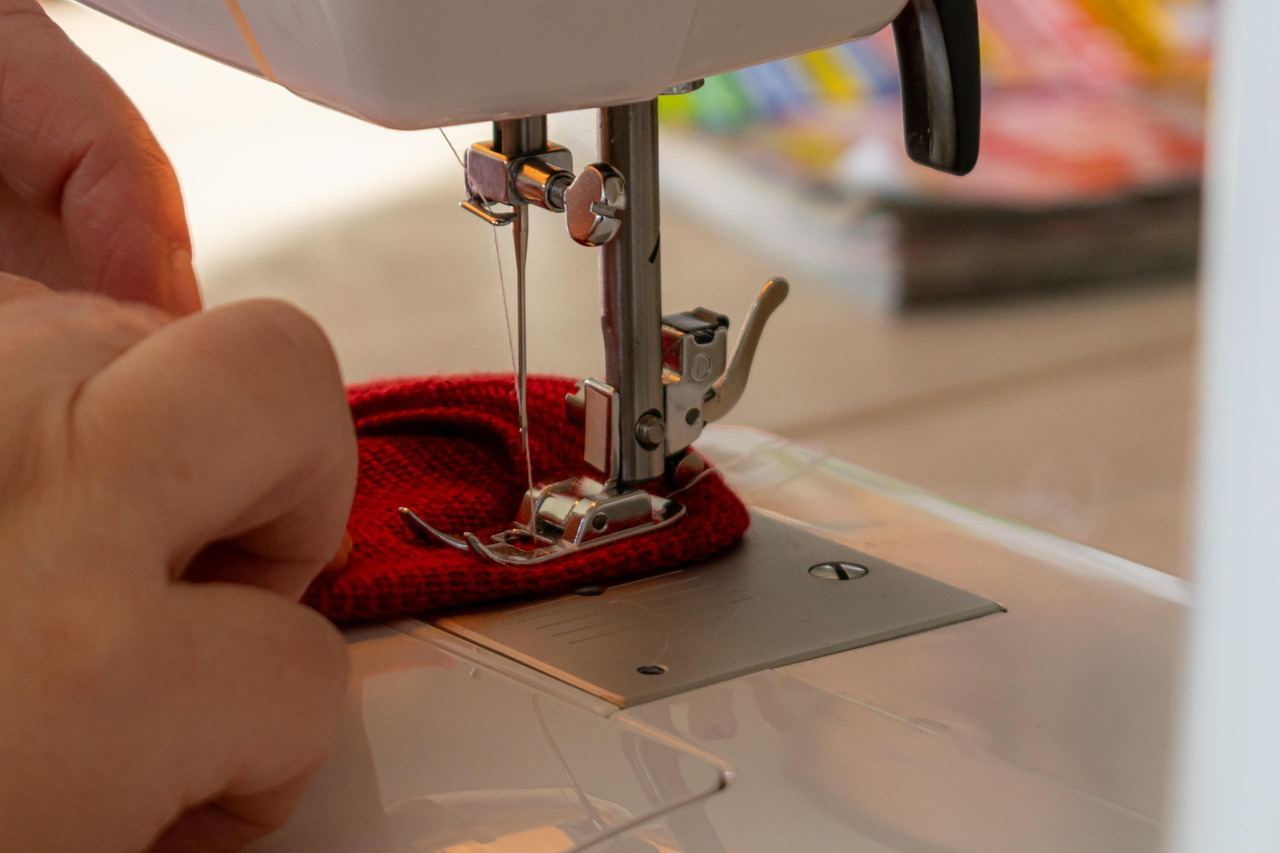
A straight stitch is the usual choice for a topstitched hem. One guide suggests a medium stitch length between 2.5 and 3, and up to 3.5 if the fabric has stretch.
These habits make the sewing smoother:
- Stitch slowly, and pull each pin out just before the needle reaches it, as the Simply Sewing guide advises.
- Remove the sewing table extension to use the free arm, which most machines allow, according to Silver Bobbin.
- Check often that you have not caught the other side of a narrow leg, since skinny legs are tricky to position under the needle.
- Go slowly over bulky seams, turning the hand wheel if needed.
By hand
A blind hem keeps stitches nearly invisible. You make a tiny stitch on the outside of the pants, then slide the needle back into the fold and make a long stitch inside, as Simply Sewing describes.
National Sewing Circle recommends a fine hand sewing needle and only one strand of thread in a colour that matches the fabric. Cut a length of about twelve inches, as Silver Bobbin suggests, so the thread does not tangle.
Trousers take a lot of wear at the hem, so keep your stitches fairly close together to avoid snags. Knot the thread inside the leg when you finish.
Special cases: jeans, slippery fabrics and quick fixes
Jeans are a different job because the original hem often looks better than a new one. National Sewing Circle shows a method that lets you keep the original hem, which helps if the lower edge is worn or distressed. For fit beyond the hem, see our petite jeans fit guide.
Choose your practice pair with care. One tutorial advises against starting with silk or other slippery, thin or stretchy fabric if you have never hemmed before; see the tutorial for its reasoning.
Short on time? Silver Bobbin notes that you can use fusible tape as a quick hem repair, though it will not look as professional as a sewn hem. The same logic of marking length with your shoes on applies if you are also shortening skirts, and our petite dress length guide covers that.
Frequently asked questions
How long does it take to hem a pair of pants?
Show answer
One beginner guide estimates 15 to 60 minutes, depending on your skill level. Allow extra time for pressing and for matching the second leg.
How far should dress pants hang off the floor?
Show answer
Silver Bobbin says dress pants and khakis should hang at least a half inch off the floor when you wear shoes. Jean lengths vary a lot with style, so that rule depends on the type of pants.
Can I hem pants without sewing?
Show answer
Yes, for a quick fix. Silver Bobbin mentions fusible tape as a hem-repair method, though a sewn hem is the more lasting choice.
How do I make sure both legs match?
Show answer
Write down the allowances you used on the first leg and repeat them on the other, as this tutorial recommends. Then try the pants on with your shoes and check the length in the mirror.